Project Spotlight:
Organic Prairie Restoration & Shrub Planting - Olmsted County
Project Spotlight - Organic Prairie Restoration
Read Farm & Forest
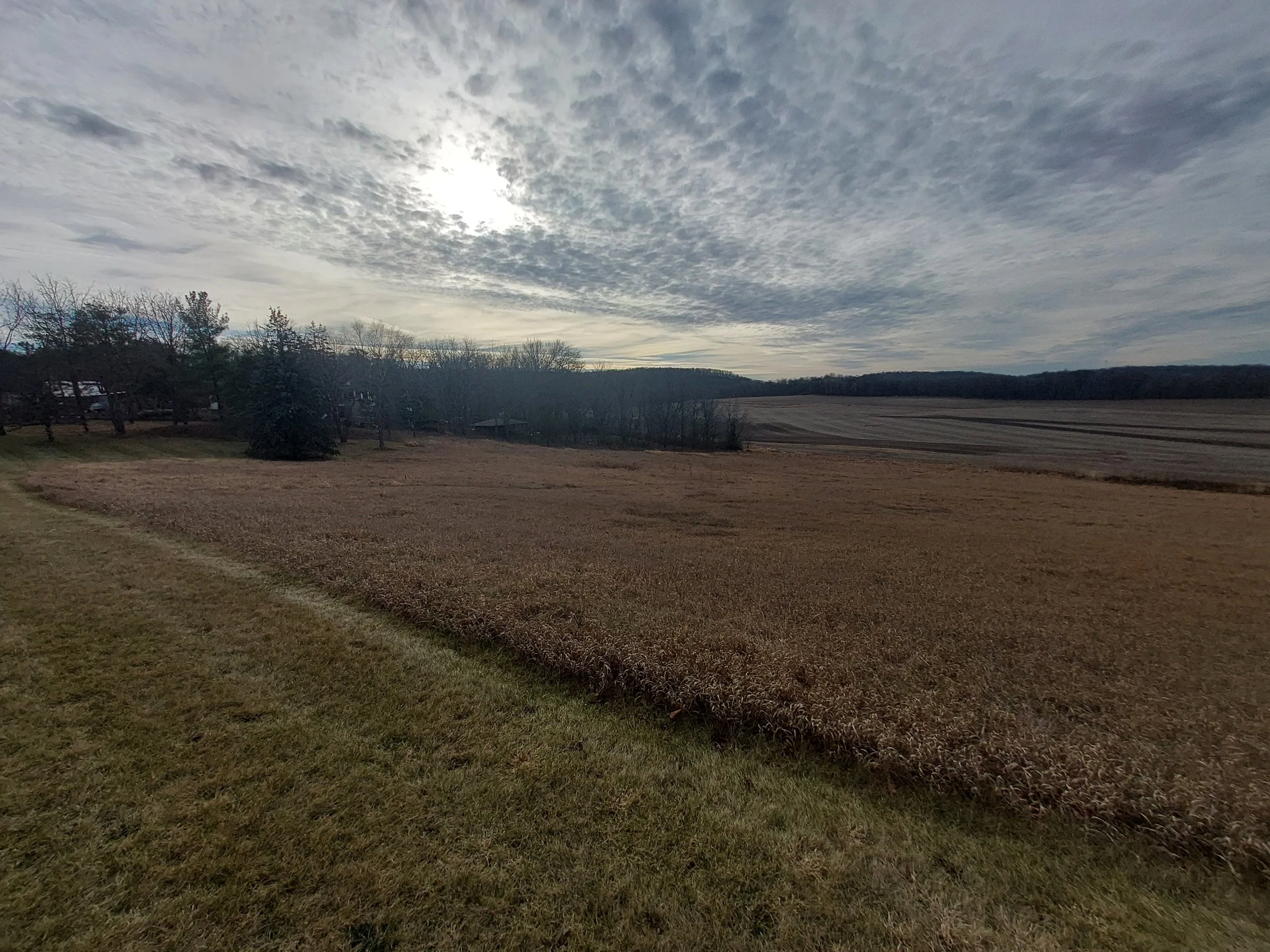
In restoration work, herbicide is a common tool that is used to prepare sites and treat invasive species. When an opportunity presents itself to limit herbicide use, we will always try to take it! This project site in Olmsted County is on a slope with sandy loam soils, and was a monoculture of smooth brome, a non-native cool season grass. Reviewing historic photos dating back to the 40’s revealed that the site doesn’t have a history of tillage, but was in hay or pasture for the last 80 years.
Finding the right tool
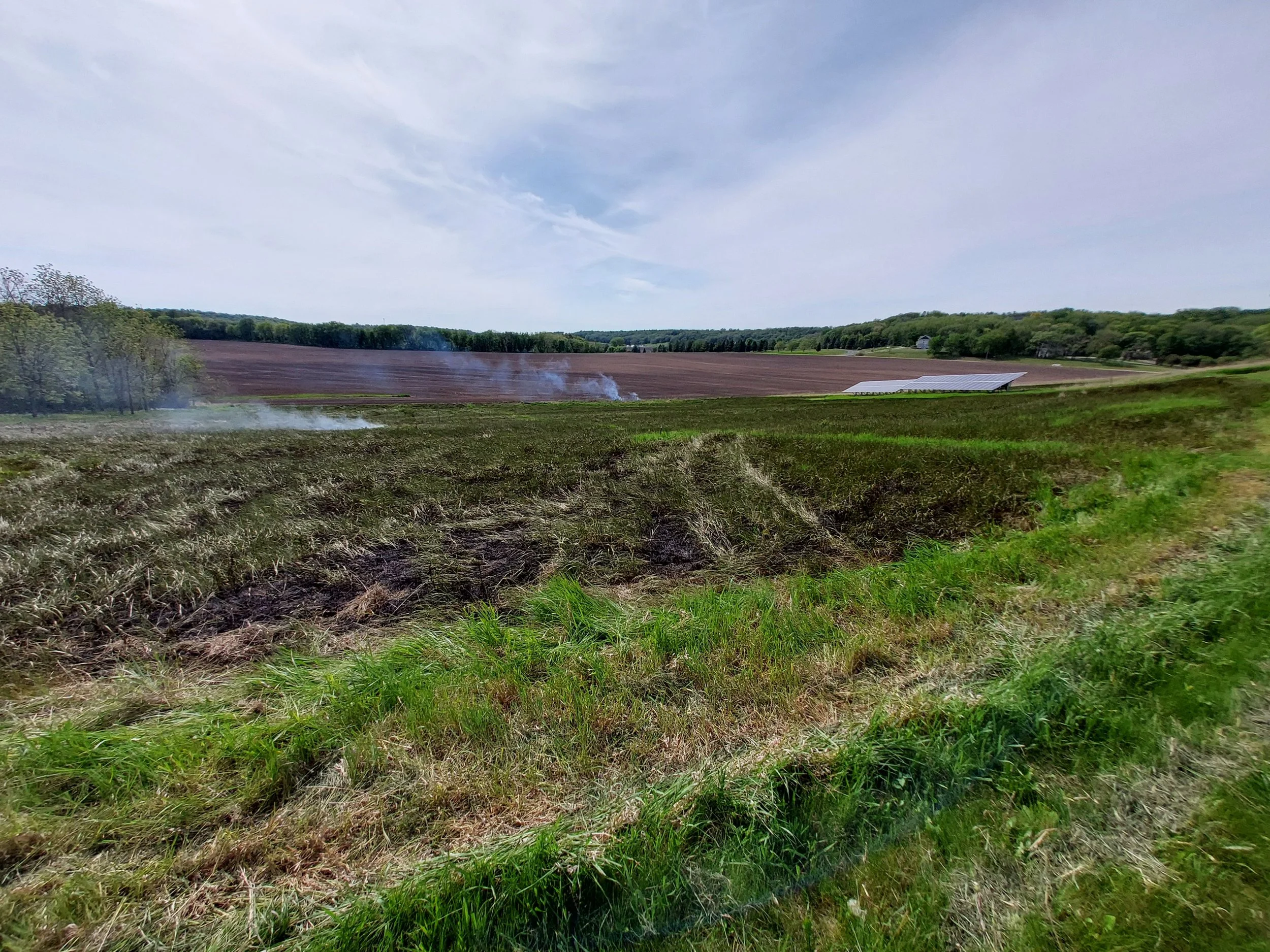
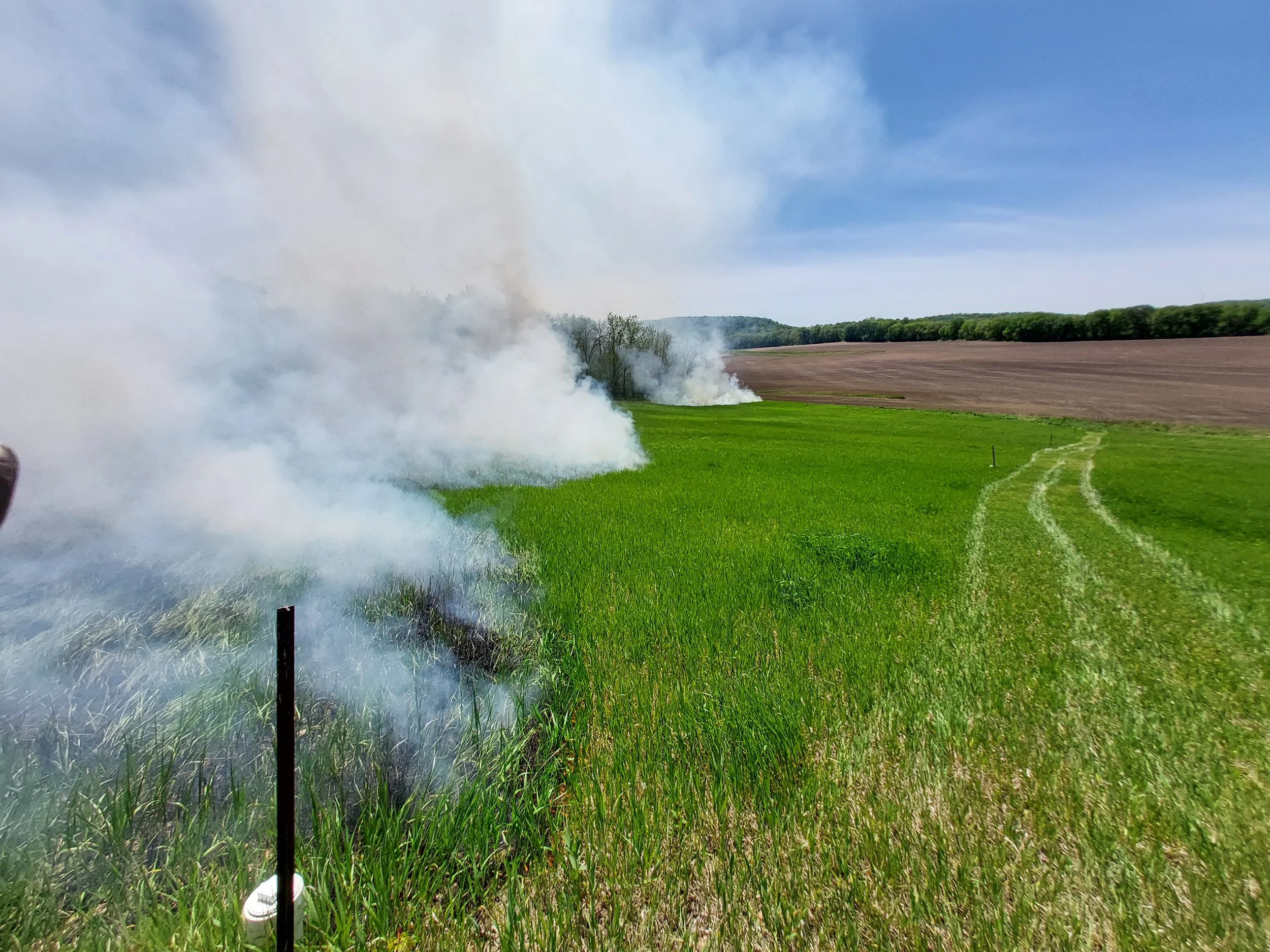
The client for this site was interested in limiting herbicide use, and had a longer timeline, so we presented a “frequent fire” method as a possibility. With the site being ~4acres, it was too large for our typical organic methods such as solarization or mulching; and the slope meant that tillage wasn’t a good option. We decided to use spring burning to prepare the site organically, setting back the cool-season grasses and providing opportunity for any existing seed bank to emerge, and create opportunity to interseed a prairie mix.
Running fire
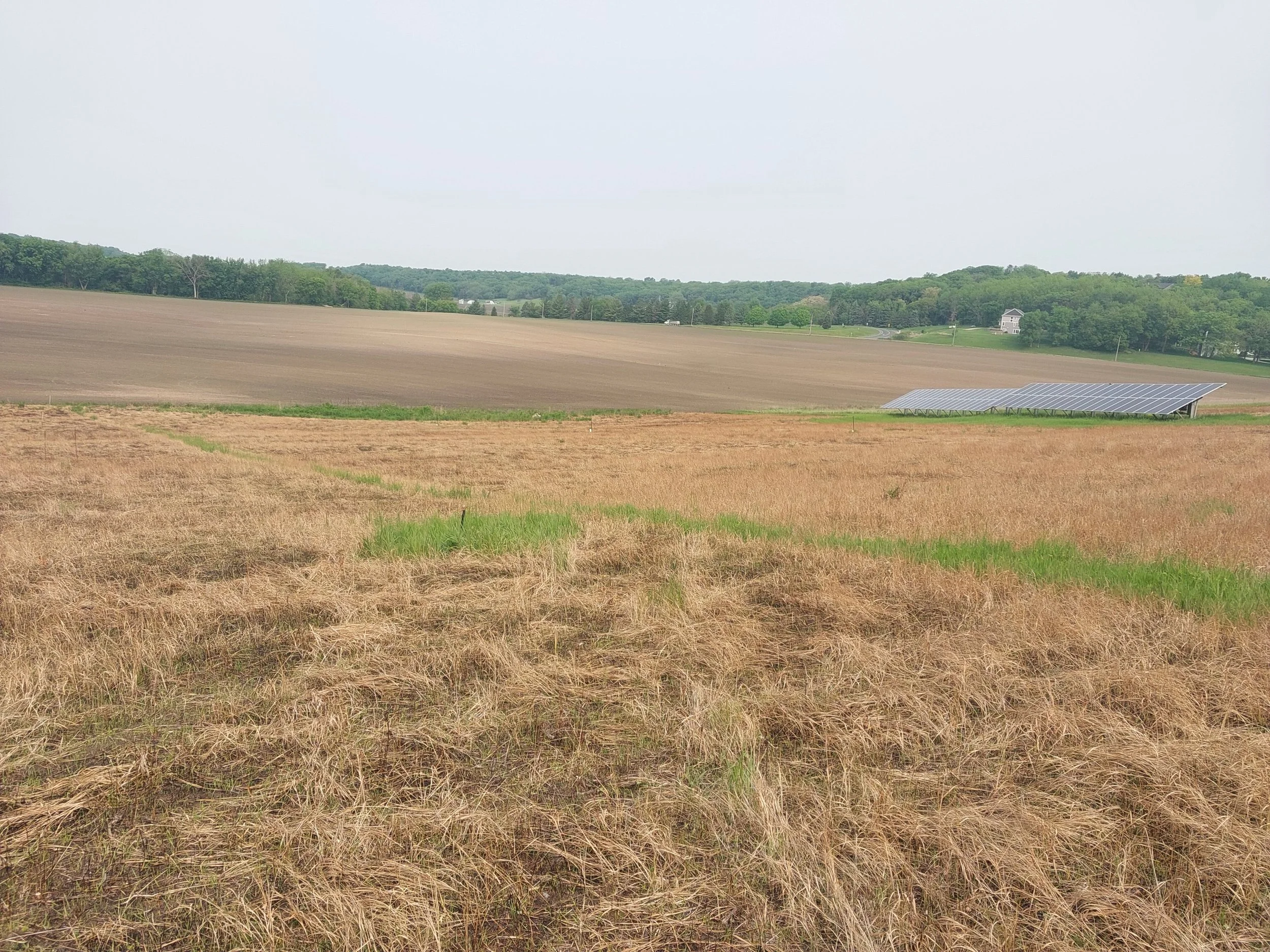
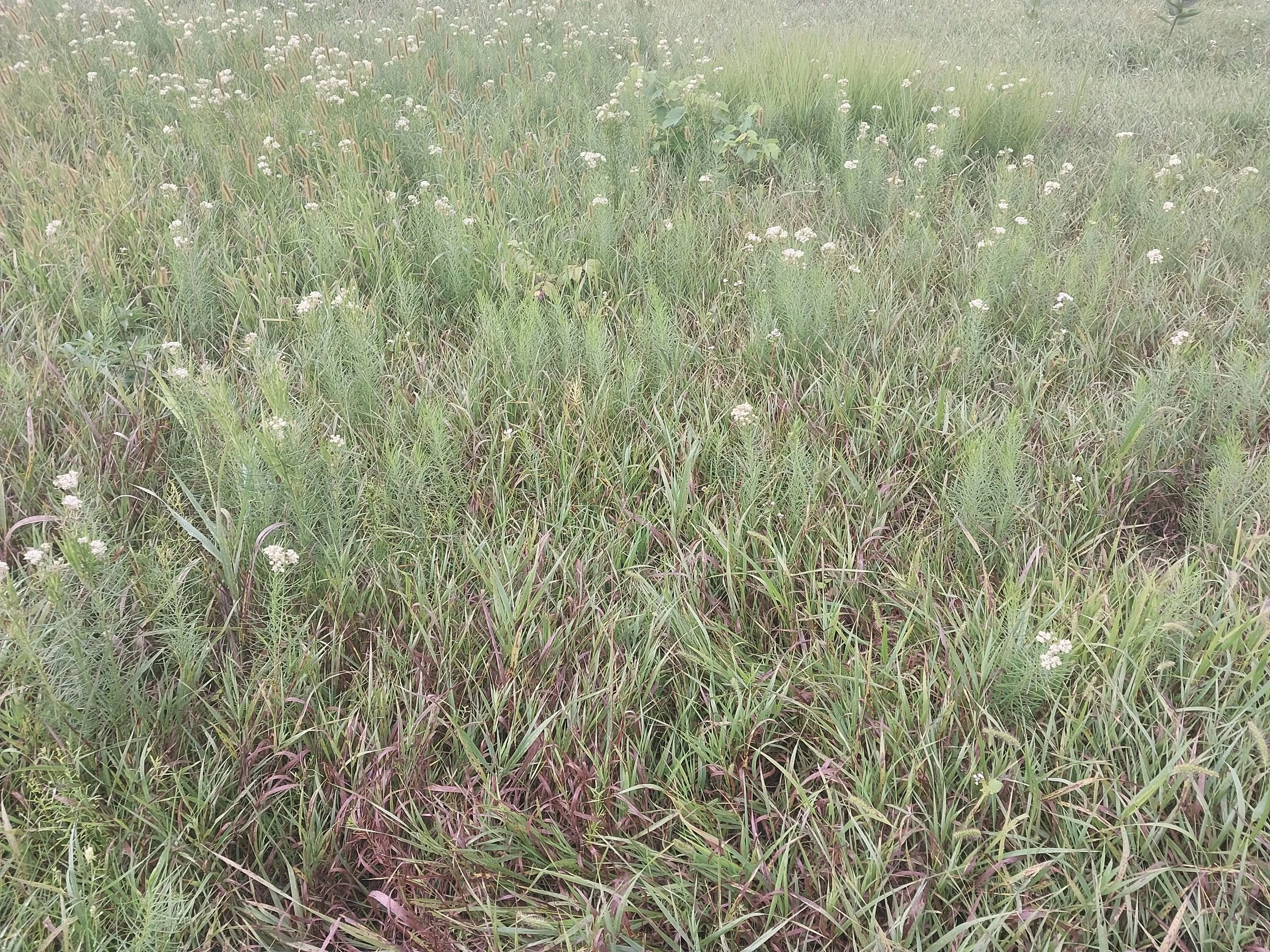
We burned the site in mid May, even though the grasses had greened up we had low humidity and had a very successful burn. We broadcasted a buckwheat cover crop into the burned area to break up the smooth brome monoculture. The prairie seed wasn’t planted the first season so that we could observe the site and see what might emerge from the seed bank. By mid-summer we had several native species emerging that we hadn’t identified before, including indian grass and whorled milkweed.
Planning ahead, assess and adapt
The next step for this site will be to burn again this spring, followed by drilling a prairie seed mix appropriate for the soil. The area will be mowed regularly this year to allow the prairie seed to germinate and establish. We anticipate burning annually for the next several years to keep pushing back the cool-season grasses and provide opportunity for the prairie grasses to establish.
Takeaways, manage, not control
With a non-chemical method, we are unlikely to eradicate non-native species, so instead we apply tools useful for long-term management. This site did involve some chemical treatment: there is a solar installation that precluded the use of fire, and there was a large established population of canada thistle that was treated. Our hope is that in the future we will largely be able to control target species mechanically, and with fire and grazing.
This project was a great opportunity for us to use principals of disturbance ecology to modify an existing plant community rather than use a chemical “burndown” method. I look forward to working with this great client and having more success on this site.
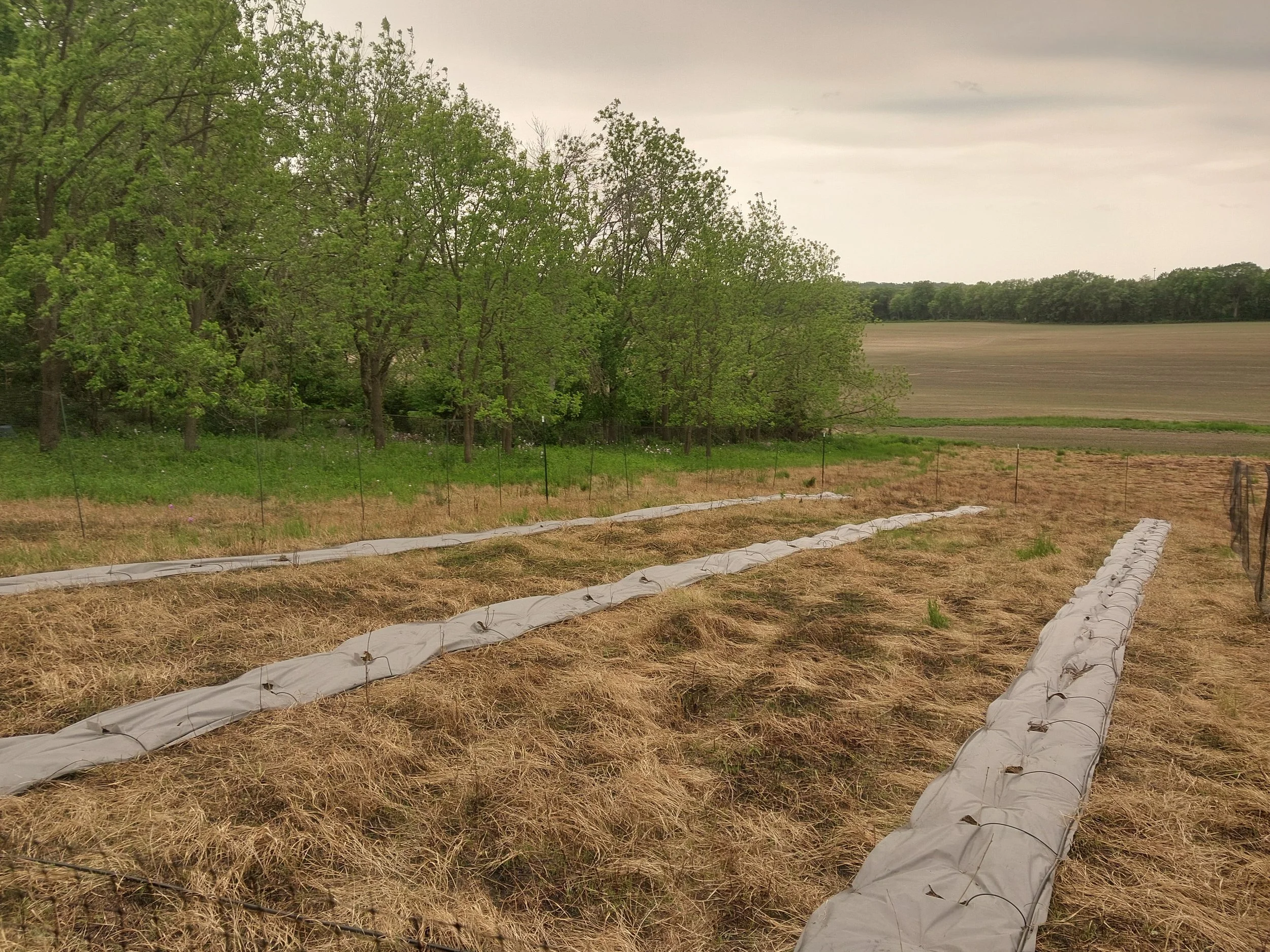
In addition to the prairie planting, this project also involved the planting of 300’ of native shrubs for wildlife and forage value. The planting was done following the prescribed burn and involved the construction of a temporary deer fence and drip irrigation system.
To learn more about this project, or for other examples of our work contact Aidan Read, aidan.read@gmail.com.